
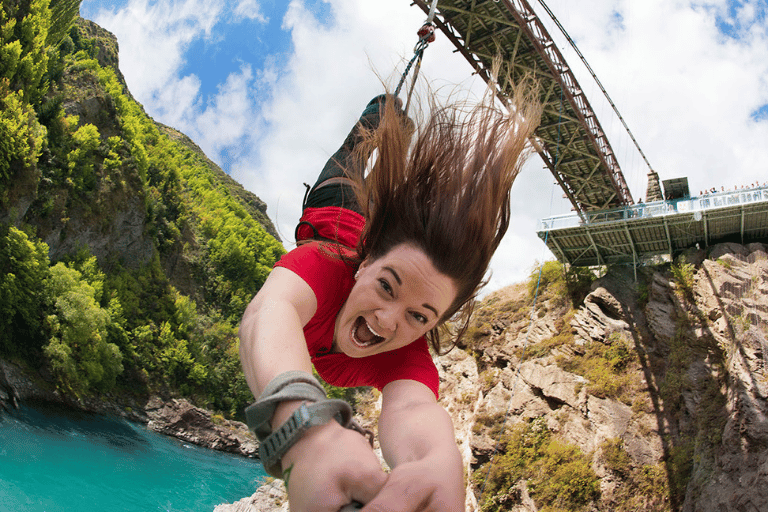
Have you ever looked at the spelling of bungy and wondered why some people spell it bungee? Or if they are actually different activities? Short answer: bungy and bungee are the same activity with two different spellings.
“Bungee” is the more common global spelling and the one most people type into Google. “Bungy” is the New Zealand spelling, and it’s the one AJ Hackett has used since the sport’s first commercial jump in 1988. If you searched “bungee jumping” and landed here, you’re in the right place — we just spell it our way.
Where the word bungee actually comes from
Nobody knows exactly where “bungee” came from. The Oxford English Dictionary lists its origin as unknown, though a similar word shows up as early as 1825 meaning something thick and squat, and by the 1930s “bungee” was already British slang for a rubber cord or elastic strap used on gliders and luggage. The jumping sport itself borrows its idea from Naghol, the land-diving ritual practised for generations on Pentecost Island in Vanuatu, where young men leap from wooden towers with vines tied to their ankles.
The modern version — jumping purely for the thrill of it, with the cord doing the catching — started in 1979, when members of Oxford University’s Dangerous Sports Club jumped from Bristol’s Clifton Suspension Bridge. That’s the “bungee” side of the story: British, and spelled with two e’s.
Why AJ Hackett spells it “bungy”
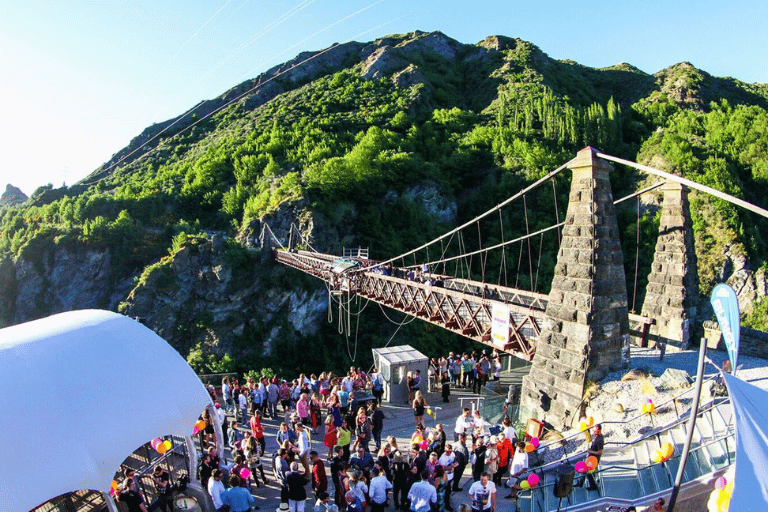
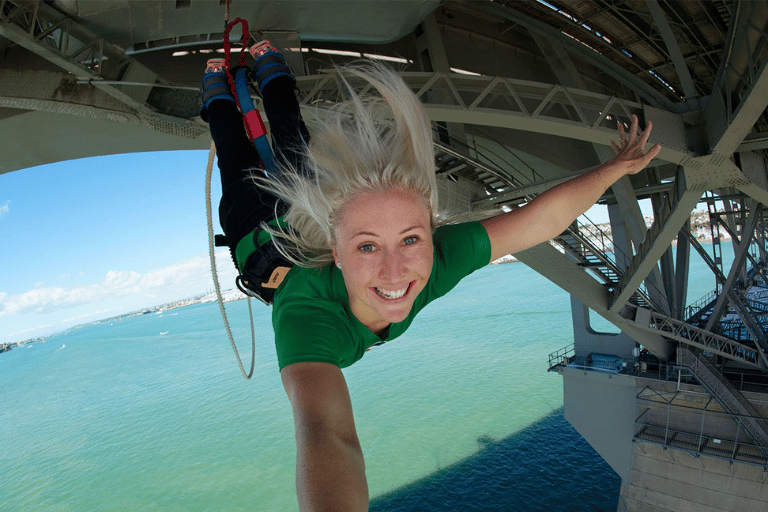
AJ Hackett made his first amateur jump off Auckland’s Upper Harbour Bridge in 1986, then grabbed the world’s attention with an illegal bungy jump off the Eiffel Tower in 1987. In 1988, he and Henry van Asch opened the world’s first permanent commercial bungy site at the Kawarau Bridge in Queenstown — still operating today, and still the original.
“Bungy” is the spelling that took hold in New Zealand as the sport was commercialised here, and it’s the one AJ Hackett has built the brand on for almost 40 years. It’s not a typo or a rebrand for the sake of it — it’s the local spelling attached to the place where bungy jumping became a real, bookable, standing-on-a-bridge-about-to-jump tourist experience, rather than a one-off stunt.
So is there an actual difference between bungy and bungee?
Functionally, no — it’s the same activity: a jumper, a cord, and a very long drop. Some long-time operators and enthusiasts point to a difference in equipment history, with early US operations favouring shock-cord style bungees and New Zealand operators favouring the all-rubber cord design AJ Hackett pioneered, but that’s a note on gear and technique, not on what to call the sport. Whichever spelling you search, you’ll end up looking at the same 43-134 metre drop.
Ready to try your first bungy (or bungee)?
If you’ve been thinking for some time you’d like to try a bungy jump, and want to do it somewhere epic, we’ve compiled a list of the top ten bungy jumping locations in the world. The list has some amazing locations, including two right here in New Zealand. Top of the list is the Kawarau Bridge Bungy in Queenstown. It’s the first commercial bungy jump in the world, and with a 43-metre leap is an authentic Kiwi adrenaline experience.
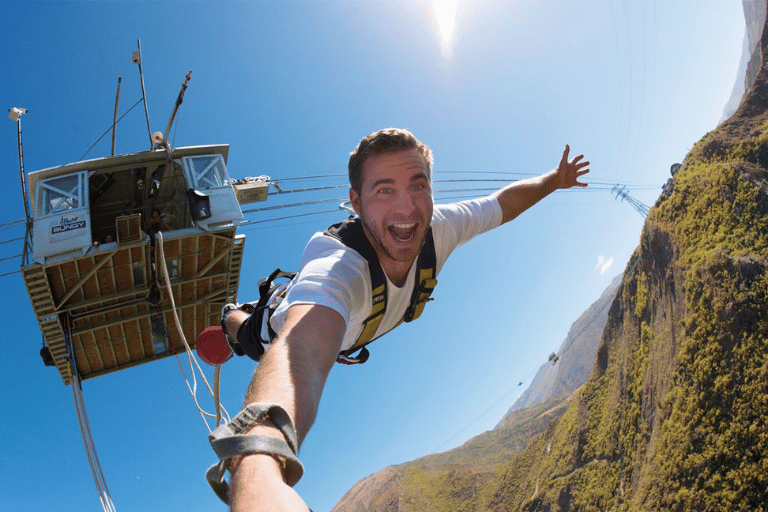
Also on the list from Queenstown is the Nevis Bungy Jump. It is a 134m jump from a suspended pod into the vast Nevis Valley and is the highest bungy jump in New Zealand. As you’ll read when you head to the Nevis page, it’s 8.5 seconds of pure fear (and lots of adrenaline).
FAQs:
Is it “bungy” or “bungee”?
Both bungy and bungee are correct. “Bungee” is the more widely used spelling worldwide and the one most search engines default to. “Bungy” is the New Zealand spelling, used by AJ Hackett Bungy and other NZ operators since the sport was commercialised in 1988.
Why does AJ Hackett spell it “bungy” instead of “bungee”?
Because AJ Hackett Bungy is a New Zealand company, and “bungy” is the spelling that took hold locally when AJ Hackett opened the world’s first commercial bungy site at Queenstown’s Kawarau Bridge in 1988.
Who invented bungy jumping?
Modern bungee/bungy jumping began in 1979 with Oxford University’s Dangerous Sports Club jumping from Bristol’s Clifton Suspension Bridge. AJ Hackett made it a commercial, repeatable tourist experience, opening the world’s first permanent commercial site at Kawarau Bridge in Queenstown in 1988.
Where did the idea for bungy jumping come from?
It’s inspired by Naghol, the land-diving ritual from Pentecost Island in Vanuatu, where jumpers leap from tall wooden towers with vines tied to their ankles.
Is bungy jumping the same as bungee jumping?
Yes. Same activity, different regional spelling — “bungy” in New Zealand, “bungee” almost everywhere else.


