
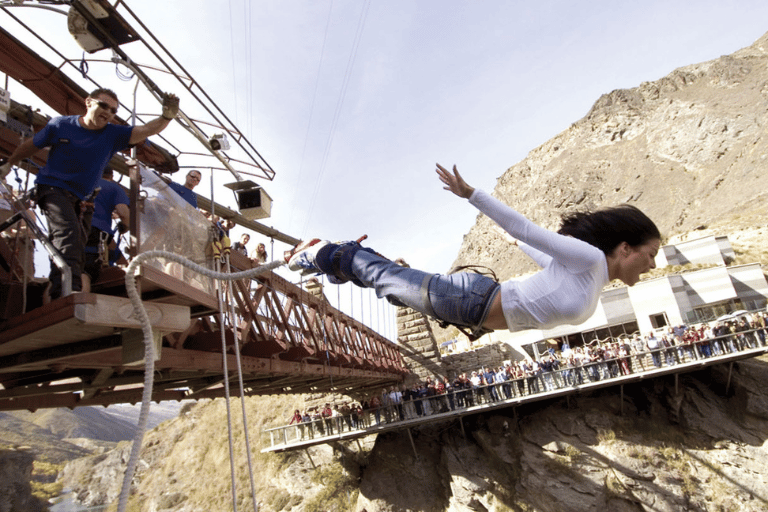
AJ Hackett and Henry van Asch pioneered commercial bungy jumping, transforming years of backyard experimentation into the world’s first commercial bungy site at Kawarau Bridge in 1988. Their bold vision sparked a global adventure tourism industry that’s still inspiring people to live more and fear less.
Every great adventure starts with an idea. Some start with years of careful planning… Others begin in someone’s backyard.
Believe it or not, the story of commercial bungy jumping started with a couple of adventurous Kiwis asking a simple question: “What if this actually worked?”
Fast forward a few decades, and millions of people around the world have taken a leap of faith. But none of it would have happened without two pioneers, a healthy disregard for convention, and one very famous jump from the Eiffel Tower.
Before Bungy Was a Bucket List…
Today, bungy jumping feels like a rite of passage.
You book online. You roll up in the big black bungy bus emblazoned with: Do more. Fear Less.
You get harnessed and then, you take the leap. Simple.
Back in the 1980s, though, the idea of voluntarily jumping off a bridge attached to an elastic cord sounded completely outrageous.
There was no playbook, no blueprint, no commercial adventure tourism industry. Just AJ Hackett and Henry van Asch, experimenting with cords, physics, engineering, and one very big idea.
The Backyard Experiments
Long before crowds gathered at bridges around the world, there were countless hours spent testing.
Different cords. Different materials. Different attachment systems. Different ways to make the experience not only exhilarating, but reliable and repeatable.
It was about creating an entirely new kind of adventure. One that balanced heart-racing excitement with meticulous engineering and safety.
Like any good Kiwi innovation, it involved plenty of problem-solving, persistence, and thinking outside the box.
The Jump That Changed Everything
Fast forward to 1987.
Under the cover of darkness, AJ Hackett climbed the Eiffel Tower. He didn’t have permission or an audience, just an idea that deserved the world’s attention.
Then, he leapt.
For a few breathtaking seconds, he plunged towards the streets below before the cord stretched, caught him, and launched him back into the Parisian sky.
It was over almost as quickly as it had begun. French police were waiting for him when he reached the ground and he was promptly arrested. But by then, it didn’t matter. The footage had already begun its journey around the world.
Television stations couldn’t get enough of it. Newspapers splashed the images across their front pages. Millions of people watched in disbelief.
Overnight, people were asking:
“Who was this fearless New Zealander?”
“Why would anyone willingly jump off the Eiffel Tower?”
“Could ordinary people do this too?”
The answer was yes. And adventure tourism would never be the same again.
The Birthplace of Commercial Bungy
One year later, another piece of history was made. In 1988, the Kawarau Bridge near Queenstown became the world’s first commercial bungy jumping site.
People thought they were crazy. Who would pay to jump off a bridge?
Turns out… Quite a lot of people. The historic bridge became the birthplace of an entirely new industry.
Visitors travelled from all over the world to experience something they’d never experienced before.
Today, over 400,000 people make the pilgrimage to the Kawarau bungy site each year.
Now, when jumpers stand on the edge of the Kawarau Bridge they have become part of a story that began more than three decades ago.
Live More. Fear Less.
If there’s one idea that’s stayed constant since those early experiments, it’s this:
Life gets better when you say yes to things that scare you.
Not because fear disappears, because it doesn’t. Even experienced jumpers still feel nervous standing on the platform. The difference is choosing to step forward anyway.
Over the years, that simple philosophy has become part of everything AJ Hackett stands for.
Adventure isn’t about being fearless. It’s about discovering what happens when you don’t let fear make your decisions.
Every countdown, every deep breath, every leap is a reminder to someone that they’re capable of more than they think.
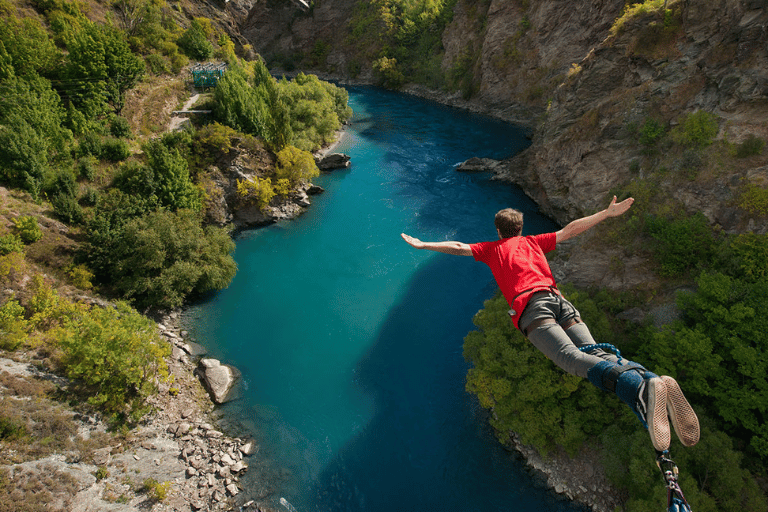
A Legacy That Continues
From a handful of backyard experiments and a guerrilla leap from the Eiffel Tower to welcoming millions of adventurers from around the world, AJ Hackett has never stopped pushing the boundaries of adventure.
Since those pioneering days, new locations have opened, including Taupō Bungy and the legendary Nevis.
The spirit that drove that first mission to the Eiffel Tower still lives on today in the Auckland SkyJump from the Sky Tower, a bold leap above one of New Zealand’s most recognisable landmarks.
Along the way, AJ Hackett has continued to redefine adventure with experiences like the Nevis Catapult, the Kawarau Swing and Nevis Swing, and Auckland’s SkyWalk and SkyRide.
New generations continue discovering what it feels like to take that first leap, but the heart of the story hasn’t changed.
It’s still about helping ordinary people do something extraordinary.
Why the Story Matters
When you stand on the edge of the Kawarau Bridge today, you’re doing more than ticking off a bucket-list experience. You’re standing at the birthplace of commercial bungy jumping, where a bold idea sparked a global adventure movement and helped earn Queenstown its reputation as the Adventure Capital of the World.
You’re following in the footsteps of millions of people who’ve chosen courage over comfort.
You’re becoming part of a story that began with one bold idea and two New Zealand pioneers who believed there had to be a more exciting way to experience life.
And perhaps that’s the greatest legacy of all. Not that AJ Hackett invented a new way to jump, but that he inspired generations of people to live a little more boldly.
FAQs
Where was the world’s first commercial bungy jumping site established?
In 1988, the Kawarau Bridge near Queenstown became the world’s first commercial bungy jumping site, founded by pioneers AJ Hackett and Henry van Asch. Today, over 400,000 people visit the historic site each year.
Why did AJ Hackett jump off the Eiffel Tower in 1987?
Under the cover of darkness in 1987, AJ Hackett jumped off the Eiffel Tower because he had an idea that deserved the world’s attention. The resulting footage captured global media focus, answering the question of whether ordinary people could take the leap and changing adventure tourism forever.


