
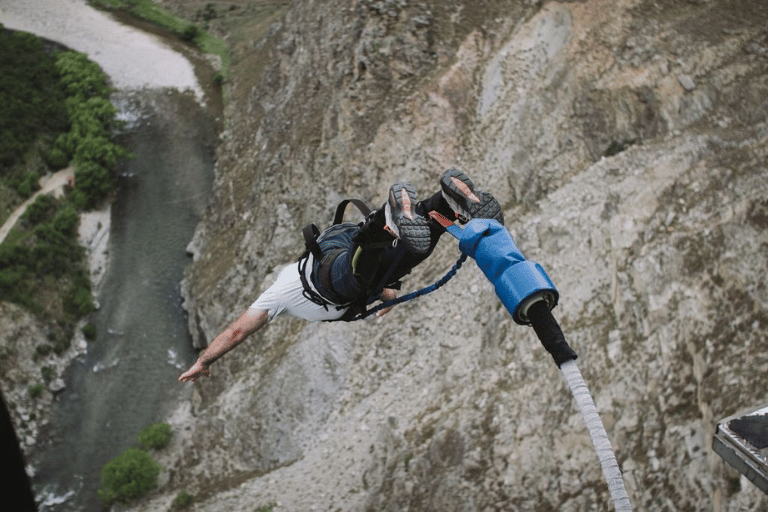
Behind the scenes, AJ Hackett Bungy NZ’s safety procedures include rigorous equipment inspections, multiple harness and attachment checks, and systematic verification by trained crew before every jump. From daily equipment inspections to double-checking carabiners and harness fittings, every step is designed to help ensure your bungy experience is as safe as possible.
Okay, so let’s address the bungy-sized elephant in the room. When you tell someone you’re going to jump off a platform, there’s always one friend who says:
“Wait… so you’re attached to a giant rubber band?”
Well, technically… yes.
But that’s a bit like saying a Formula One car is just a vehicle with four wheels.
There’s a whole lot more going on behind the scenes.
“I can’t speak for every bungy site there is in the world, but as for our New Zealand operations, bungy jumping is very safe. Whether your concern is with our gear, harnesses, the g-force, or the environment, I can assure you that our safety standards are so high that there is minimal room for error,” explained Sam Mills, who has been part of the crew at AJ Hackett Bungy New Zealand in Auckland for the past three years. Now, she is a Jumpmaster-in-training.
In fact, by the time you reach the edge of the platform, your jump has already been through countless checks and procedures that most people never even notice.
So let’s pull back the curtain and show you what “safe” actually looks like at AJ Hackett Bungy New Zealand.
Safety Starts Long Before You Arrive
While your day might begin with a coffee then a visit to the check-in desk, the crew’s day starts much earlier.
Before the first jumper even walks through the door, equipment is inspected, systems are checked, and every part of the operation is prepared for the day ahead.
“On a mechanical level, all of our equipment is checked daily, verified by professionals, and well cared for. So, is bungy jumping actually safe? With us, our proven safety record says it is,” said Sam.
Safety isn’t something that’s switched on when you arrive. It’s already been happening for hours, and it’s been part of the AJ Hackett way from day one. It’s one of the reasons we’ve built world-class systems that support a perfect safety record.
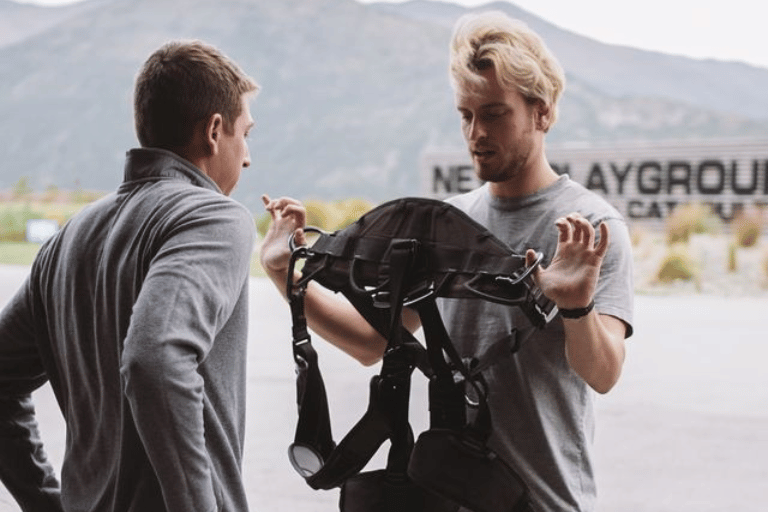
A Bungy Cord is Not Just an Elastic Band
A bungy setup is so much more than the cord. So let’s take a look under the hood.
If you’ve never seen a bungy setup up close, you might imagine a single elastic cord attached to your harness. In reality, there’s a lot more happening.
Your jump involves multiple pieces of specialist equipment working together, including:
- Your full-body safety harness
- Ankle harnesses (foot cuffs)
- Multiple connectors and attachment points
- Carabiners
- Bungy cord
- Backup systems
- Recovery equipment
Every component has a purpose, every connection is checked, and every piece of equipment is designed to work as part of a complete safety system.
Sam explains: “The bungy cords, ropes, carabiners, and all connection points and recovery operations are all physically inspected and/or cross-referenced every morning. Prior to someone jumping, the cord, ropes, knots, and connections to the jumper are (thoroughly!) visually and verbally double-checked by both operators!”
The Low-Down on the Strapping-In Process
Ever noticed the crew taking what feels like forever while fitting your harness?
There’s a reason for that. They’re not just making conversation to calm your nerves.
They’re checking, adjusting, verifying, and then checking again.
Your harness is fitted specifically to you, ensuring everything sits exactly where it should before you ever leave the platform.
Then another crew member independently verifies those fittings, because when it comes to safety, two sets of eyes are always better than one.
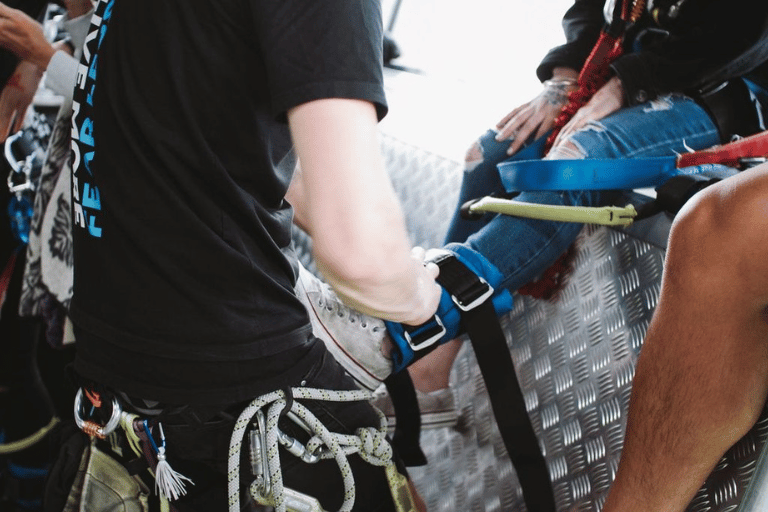
Why Does Everyone Keep Touching the Carabiners?
If you’ve watched someone prepare for a jump, you’ve probably noticed the crew repeatedly reaching for the same clips. That’s intentional. Every attachment point is physically checked.
Not once, multiple times. It might look repetitive, but that’s the point.
Safety isn’t simply looking at equipment and hoping it appears okay. The crew is constantly scanning for anything out of the ordinary.
That could include:
- Harness fit
- Correct attachment points
- Equipment condition
- Correct loading of hardware
- Proper locking of connectors
- The jumper’s position
- Clear communication between crew
Nothing is left to assumption.
Every stage follows established procedures to ensure everyone is on the same page before the countdown even begins.
“Even though it feels extreme, you’re in a safe, supported environment with an experienced crew who have been doing this for a long time and carry out multiple safety checks,” explained Zamira, AJ Hackett Bungy New Zealand staff member.
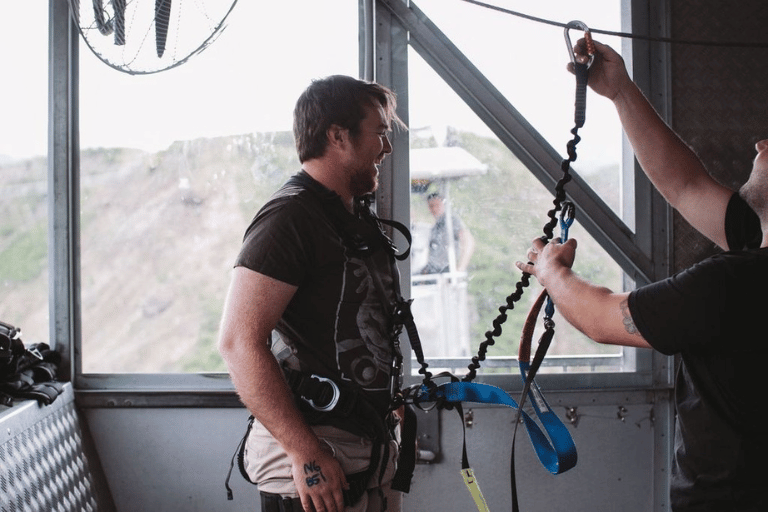
So… why all the repetition?
Whether you’re flying in an aeroplane, climbing a mountain, or preparing for a bungy jump, the safest systems are the ones that don’t rely on memory alone.
That’s why you’ll see the crew repeat checks you’ve already watched them perform.
As an engineer and Nevis Human Catapult customer, Raymond is very familiar with steel cables.
“I admired the quality of the design and construction of the cableway and its structure, suspended several hundred metres above the Nevis River. The bridge out to the operating center felt completely safe, and I had no reservations walking out there.”
For Raymond, it was the crew that really stood out.
“The two young men came across to us as friendly, very competent, and business-like,” he says. “You could tell this was serious stuff, and they wanted no mistakes.”
Here’s the Inside-Scoop on the Bungy Cord…
The cord itself tends to get all the attention. Ironically, it’s only one part of a much bigger system.
Each cord is purpose-built, carefully maintained, and matched to the jumper and the specific jump conditions.
The reality is that the “rubber band” people imagine is actually sophisticated engineering that’s been refined over decades.
One of the biggest misconceptions about bungy jumping is that the cord might snap. It’s an understandable concern, but one that doesn’t reflect how the equipment is managed.
Sam breaks it down:
“A cord has never snapped at one of our sites, but here’s how we prevent it… One thing AJHBNZ strives to be the best at is safety – and this is my favourite example. All Bungy cords have a lifespan of ‘x’ jumps, UV exposure hours, hours of use, etc.
“We remove a bungy cord from service when it’s only a fraction of the way through its technical life, keeping its operational life active while the cord is at its freshest.
“Between consistently checking our cords multiple times a day and routinely replacing them, we can spot an abnormality in a cord almost instantly. You can rest assured that the cord you jump on is not only safe and won’t snap anytime soon, but we have a finger on its pulse and always know exactly what condition it’s in. Because of this, we’ve never had a cord snap at AJ Hackett Bungy NZ.”
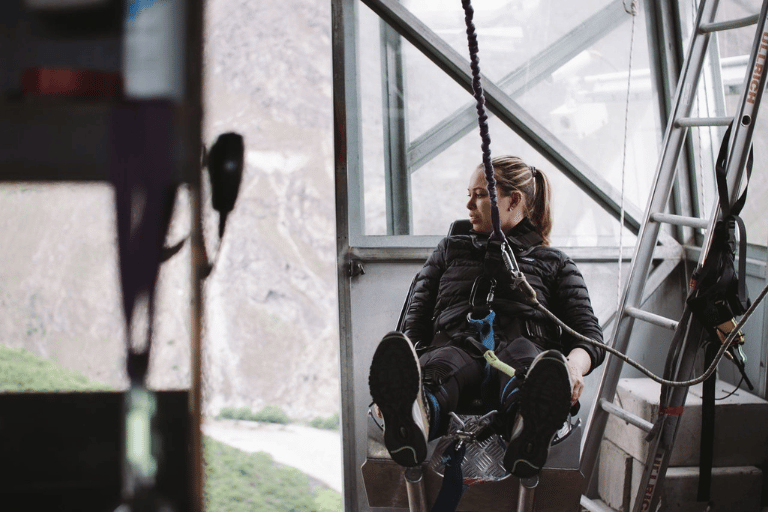
The Crew Wants You to Have Fun…
…but they also want you to get home afterward with nothing more than an enormous smile and an incredible story.
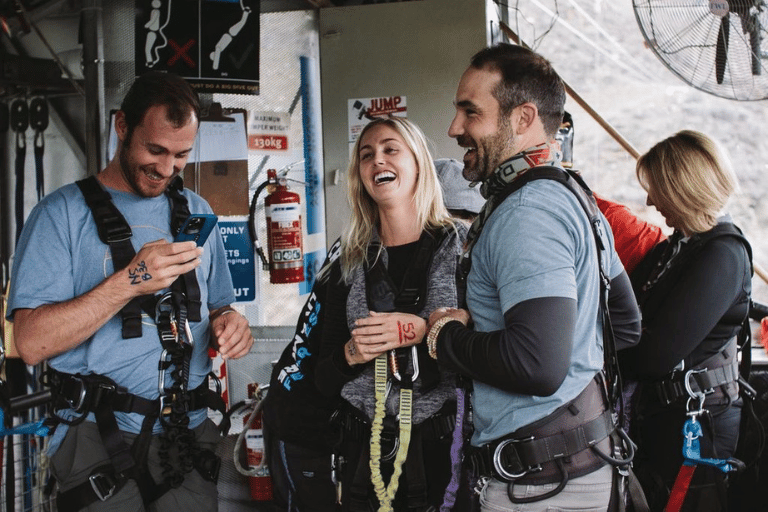
That’s why you’ll often hear the crew chatting, joking, and having fun while simultaneously carrying out incredibly methodical safety procedures.
The relaxed atmosphere isn’t because safety isn’t being taken seriously.
Is because the crew has trained extensively to make those procedures second nature.
Jumpmaster Simon explained: “Everything you’re feeling now will go away once you leave the platform. Yes, this is scary, but it’s meant to be, and that’s what makes it so fun. It’s very safe and I’ve jumped over 200 times myself, so I know what you’re going through right now, but trust me once you leave this platform and jump it is one of the best things you’ll ever do, so take a deep breath in, close your eyes if you need to, lean forwards and let gravity and the equipment take care of the rest.”
The best safety system is one you hardly notice. Which means while you’re busy deciding whether today is really the day you jump, the crew have already completed dozens of small actions designed to make sure your experience is as safe as it can be.
Want to Learn More?
If you’re curious about how AJ Hackett Bungy New Zealand approaches safety, equipment, and operational procedures, visit our Safety page for more information about the systems working behind every jump.
We’ll take care of the checks. You just have to decide whether you’re ready to take the leap.
FAQs
Could the bungy cord actually snap during my jump?
Not at all. In fact, a cord has never snapped at an AJ Hackett Bungy NZ site. Cords are retired long before they reach the end of their lifespan, well before any real wear can set in. The crew tracks jump counts, sun exposure, and hours of use while physically inspecting every cord multiple times a day, so you’re always jumping on fresh, top-condition gear.
How do I know my harness and gear are totally secure before I jump?
You’re in safe hands long before you reach the platform edge. First, your harness and foot cuffs are fitted specifically to your body. Next, a second crew member independently double-checks every single connection and knot. Finally, the team physically tests every clip and carabiner multiple times to make sure everything is locked down tight, leaving zero room for error.


