
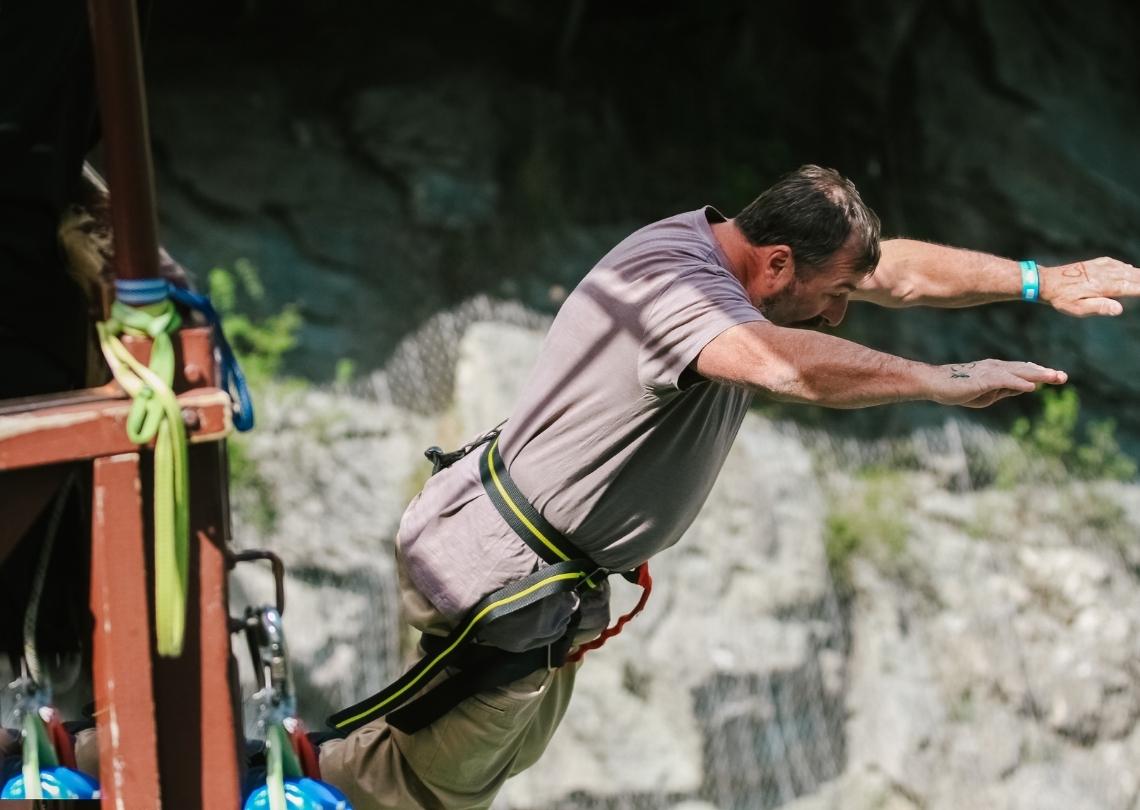
Bungy jumping feels scary because it activates the brain’s natural fight-or-flight response, triggered by the perceived height and loss of control. The fear is strongest before the jump, when anticipation allows the mind to imagine worst-case scenarios. But once you leap, a cocktail of adrenaline, endorphins, and dopamine replaces fear with exhilaration. For first-timers, the best tips are to expect the fear as a normal response, trust the experienced crew and safety systems, and commit to the jump before stepping onto the edge.
The Psychology of Fear: Why Bungy Jumping Feels So Scary, Tips for First-timers with Jumpmaster Josh
Every day, Taupō Jump Master Josh watches the same moment play out: someone reaches the edge of the platform, and their knees begin wobbling as their brain screams “nope.” Josh has encountered fear in every form imaginable and is an expert in its psychology. He calmly coaches first-time jumpers through these feelings.

As a kid, Josh watched AJ Hackett bungy jumping on TV and thought, “Imagine doing THAT for a job.” It felt impossible, just a wild childhood fantasy. Years later, stuck in an unfulfilling job in his twenties, he realised something had to change.
“I thought back to what had genuinely inspired me growing up, and that led me back to bungy jumping and ultimately becoming a Jump Master.”
Josh’s understanding of the psychology of fear comes largely from personal experience.
“I’ve dealt with anxiety myself most of my life, which has helped me recognise it quickly in others. Rather than seeing it as a weakness, I’ve learned how to use that awareness to communicate clearly, stay calm, and guide people through the moment. In many cases, I’m simply telling customers what I would tell myself in their situation.”
If the idea of bungy jumping makes your palms sweat, your stomach flip, and your brain scream “absolutely not,” as you try to flee the platform, congratulations. You’re human.
That fear you’re feeling is not a weakness. It’s biology doing exactly what it’s meant to do.
With Josh’s tips and a closer look at the psychology of fear, you’ll learn how to steady your mind, quiet the nerves, and step up to the platform ready to leap.
The ledge is going to be the worst part
Over the past 15 years, Josh has guided hundreds of thousands of jumps, and the fear people voice at the edge is almost always the same.
“Bungy itself isn’t the scariest part; standing on the edge thinking about it is.”
But why is this?
Your brain is hard-wired to keep you alive. Heights register as immediate danger, even when you logically know you’re clipped into world-class safety gear. The amygdala (your brain’s alarm system) doesn’t care about logic; it cares about survival.
“As humans, we’re wired to protect ourselves, and the brain interprets that moment as danger. The challenge is that the brain then convinces people it will only get worse once they jump.”
This is known as the fight-or-flight response, and bungy jumping triggers it more than any other activity.
“My role is to help jumpers understand that this reaction is normal, and to reframe the moment so they realise their brain is giving them false information. It can be hard sometimes, like a battle, me vs. their intrusive thoughts.”
Watch Jump Master Josh Coach the Leap
Why does your brain freak out?
The plot twist when it comes to bungy jumping is that most people say the scariest part isn’t the jump, it’s actually the anticipation.
“Often, what helps most is reminding people why they’re there in the first place, they’ve chosen to do it for fun while travelling in New Zealand, not as a test or a punishment.“
While you’re waiting, your brain has time to:
- Imagine worst-case scenarios
- Overthink every sensation
- Convince you that backing out is a brilliant idea.
But once you jump, fear turns into action. And action shuts down overthinking.
“Cutting through fear and mental fog, and reframing the moment as a positive experience, usually helps them realise that, while it is scary, what lies on the other side is a memory they’ll carry for the rest of their lives.”
The magic lives on the other side
The moment you jump, something magical happens. Your brain realises “I survived,” triggering the release of dopamine and endorphins.

“Many people describe a strong sense of relief, pride, or accomplishment once they’re on the other side. For some, it becomes a reference point, a reminder that they’re capable of more than they thought and that facing fear doesn’t always lead to a negative outcome.”
Psychologists call this exposure-based mastery, facing a fear and discovering you’re capable. Jumpers often report positive aftereffects such as mental clarity, increased confidence, and improved decision-making skills.
“If doing a bungy even slightly helps make future challenging decisions, like moving away or starting a new job, feel more manageable, then that’s cool with me.”
Bungy jumping isn’t about being fearless. It’s about being scared and jumping anyway.
“When someone is scared, I feel that fear with them; when they’re emotional, it makes me emotional. When they jump, I often experience the same rush of adrenaline and euphoria, and there have been many times it’s genuinely brought me to tears.”
And that moment, when fear turns into flight, is exactly why people say, “I can’t believe I almost didn’t do that.” Because on the other side of fear is where the magic lives.
If your heart’s racing just thinking about it, good. That’s the feeling. That’s the edge.
And if you’re scared? Even better. It means you’re about to do something unforgettable!
Face the fear. Book the jump. And find out what’s waiting on the other side.
FAQ’s
Why do I feel terrified before a bungy jump?
Feeling scared is completely normal. It’s your brain’s natural fight-or-flight response kicking in due to perceived danger even though you’re safely harnessed. The fear peaks just before the jump, not during it.
Is it normal to hesitate or want to back out?
Yes. Even seasoned adventurers get cold feet at the edge. The important thing is to expect the hesitation, trust the crew, and remind yourself why you chose this challenge.
What makes AJ Hackett a safe place to jump?
AJ Hackett is world-renowned for safety standards, expert crew, and cutting-edge equipment. Your safety is their #1 priority, and Jump Masters like Josh are highly trained to guide you through it.