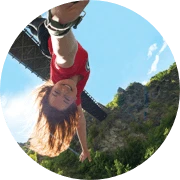
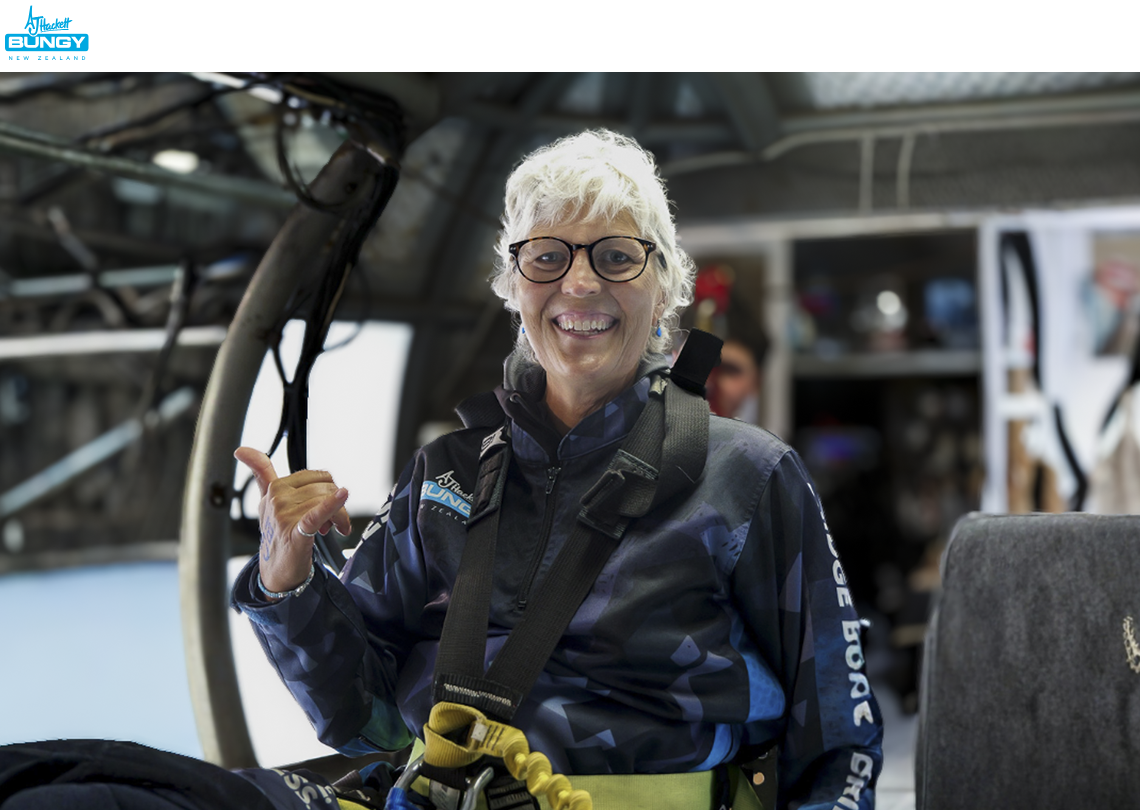
A bungy jump can be a life-affirming activity because it offers a powerful moment of choice and courage. Facing fear in a controlled, safe environment triggers the release of adrenaline and endorphins, heightening confidence and offering emotional release. For many people, especially after illness, loss, or a major life change, the act of jumping symbolises reclaiming control by facing their fears and affirming that they’re living life fully.
There are plenty of life-affirming moments… but nothing snaps you into “I am alive” quite like a bungy jump. The funny thing is, it’s rarely about the jump itself. It’s often about everything the jump represents.
Rebecca’s Story
When Rebecca stepped onto the bungy platform, it wasn’t about chasing adrenaline. It was about claiming her life back and facing her fears. The same way she faced her fears when a life-changing email landed in her inbox in 2024. “You’ve got mail…You’ve got cancer.”
But we are getting ahead of ourselves… To do this story justice, we need to travel back in time…
The year before she jumped, Rebecca had been diagnosed with stage one breast cancer. The kind of diagnosis that rearranges everything, your body, your plans, your sense of certainty. What began as stage one quickly shifted as surgery followed surgery, each one chasing clean margins. Then came stage two, lymph involvement, and finally chemotherapy. Rebecca’s hair fell out. Her energy disappeared. Somewhere in the middle of all of that, she held onto one goal: I want to bungy jump again.
She’d done it once before, 35 years ago. Back when her body felt limitless. Back when fear meant something different. This time, she wasn’t sure she’d even make it to the jump. But she did.
Rebecca was born and raised in Hallock, Minnesota (a place she describes as “flat as a pancake.”) Adventure wasn’t exactly on the doorstep, so she went looking for it herself.
“I have always had dreams, let’s call them. Back in the day, we actually had magazines, and so my room was filled with ski jump photos and things that seemed interesting to me.”
Rebecca has spent her life saying yes to movement and adventure: climbing, cross-country skiing, snowshoeing, running, walking, windsurfing, sailing… You name it. If it involved adventure, she was in.
She was right in the middle of planning her very first ocean passage, set to cross the Pacific aboard her cousins, Sheena and Brad’s sailboat, the SV Impossible (a 54-foot steel ketch once owned by explorer Jim Whittaker). It was a dream decades in the making… And then, just as those plans were taking shape, she felt a hard lump under her armpit, and everything changed.
Rebecca’s first thought was: “Houston… I have a problem.”
“Just like that, life throws you a solid curveball. My adventure shifted from sailing the ocean blue to biopsies, eventual lumpectomy surgeries, and a word that is called Cancer-Margin.”
Rebecca went through surgery… then more surgery. Her summer disappeared, replaced by words no one ever wants to hear, like “aggressive” and “you’re starting chemotherapy.”
Through all of it, Rebecca kept coming back to one thought: the sailing trip she’d been dreaming about.
“This is fine,” she told herself, trying to stay calm, “except… kids, I have to be on a sailboat, and this is really messing up my life.”
But Rebecca did not get to board the boat. Instead, she was given the big stuff, Doxorubicin (better known as the Red Devil), followed by Taxol. Five months of treatment. Five months where her body was pushed, prodded, and tested day after day. It was relentless and anything but gentle, but she kept going.
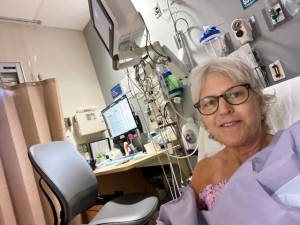
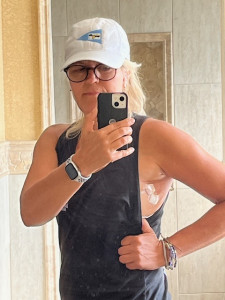
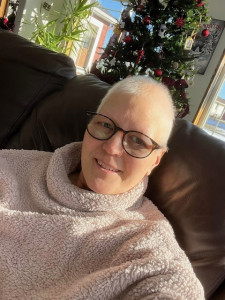
All the while, she followed her cousin’s journey on the boat.
In March 2025, she finally finished radiation. The next chapter was about small wins like growing her hair back, rebuilding her strength, and finding her way back to herself. Life was inching forward again.
She’d almost forgotten about her cousins on the boat… and then, out of the blue, the call came. “July. Fiji. Come with us.”
Just like that, a new possibility appeared.
“So my first jump was to book a flight. I feel people who enjoy bungy jumping are people who jump first and ask questions later.”
Somehow, Rebecca found herself in Fiji, sailing on toward Vanuatu and straight into adventure—even climbing an active volcano on the island of Tanna. When you’re crossing the South Pacific, the road home isn’t exactly direct; it runs straight through Australia or New Zealand. And just like that, the journey took another unexpected turn.
“As soon as the word New Zealand was out of my mouth, I knew I was going to bungy jump.”
Bungy Jumping and Facing Your Fears
Standing on the edge before a bungy jump, time does a funny thing. Rebecca describes it as “the Matrix moment,” when time slows down.
“Something magical happens as peace just sort of surrounds you, and everything goes quiet, even though your heart is pounding in your ears.”
For some, that edge is actually a line between who you’ve been and who you might become if you chose to take that one brave step forward.
“It is like a line drawn in the sand, except it is in the air. I am here, there is the edge, and when I cross that edge, I am in the unknown. It is a most wonderful opportunity to experience. I so encourage any and all to face that edge in your life, whatever it may be. I have had to face a few edges in my cancer journey, in my life.”
The day Rebecca was meant to start chemo, she put her head down in defeat. It felt like the ultimate betrayal of her own body. Every instinct in her screamed, “Don’t do this! Don’t hurt your cells like this!”
“Fear is like the moment your brain is screaming. That is science, the biology of the body speaking as my body did before chemo, it wells up like a train rolling through me, and the room was shaking.”
There was confusion. Fear. A deep, unsettling uncertainty. And yet, the science was clear. This was her edge. Stage two, grade three. Aggressive. There was no way around it. The only way forward was to stand there, take a breath, and cross it.
There’s no halfway in chemo. You stand up. You take a breath. You move forward. And you cross the edge.
“What a moment, I had tears, my body was shaking, unreal, my cells were screaming. I shook my head in disbelief, I stood up, and we marched to the infusion room. We crossed that edge. That moment, a release, the physical train roar quiets, the rumble of the room becomes still, the tears no longer fall as I raised my head to meet chemo head-on, when my fear turned to flight!”
Fear Turned To Flight
After all that, Rebecca realised she wanted to feel it again. She’d felt it once before, 35 years ago, standing on the edge of a jump on Nanaimo Island in British Columbia. Bungy jumping offered something rare: the chance to stand right on the edge, feel everything at once, and still choose.
For anyone else standing in the middle of their own life upheaval, wondering how to find the courage to face what’s ahead, Rebecca offers this simple advice.
“Listen to your body. Try to feel the rumble, the emotion, let it go through you until you can come full circle and stand with the help of your family and your friends. We are ultimately not in control. God has a way of showing us all that.” “Find your edge and just go!”
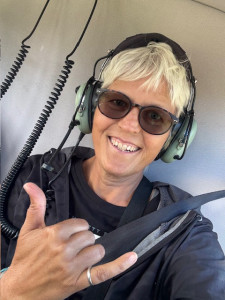
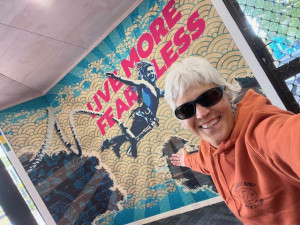
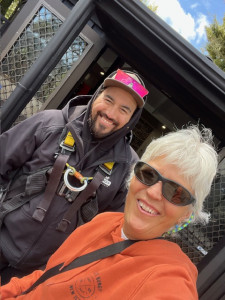
Bungy Jumping as a Symbolic Letting Go
A lot of jumpers talk about the emotional side: letting go of old chapters, old fears, grief, stress, or whatever has been simmering under the surface.
“30 years ago, it was very spiritual. I had a moment when I tried to let go and do a swan dive after about 20 minutes of friends screaming at me to go. I felt like a gust, a hand, something very unnatural lifted me back and placed me on the platform.”
Why is this? A bungy jump can feel like:
- Letting go of the past
- Letting go of who you were
Letting go of what hurt - Letting go of what held you back
- Facing your fears and coming out the other side
- Getting in touch with something larger than yourself
Cliff-diving traditions in Vanuatu inspired modern bungy, and those rituals were rites of passage and markers of courage. The modern version may involve a harness instead of vines, but the energy is the same… You leap one version of yourself and emerge as another.
What’s Next For Rebecca?
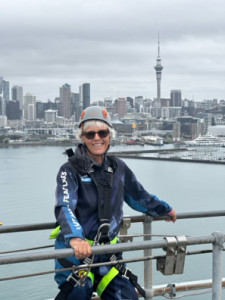
Rebecca never would have guessed that exactly one year to the day after finishing chemo, she’d be standing on the edge of a bridge in Auckland, about to jump. And just in case you’re wondering… yes, she loved it so much that she went back for a second leap, this time over the river at Huka Falls.
“Those who know me know that chemo was my adventure at that time. It can knock you down, and yet you can rise up. Now the journey is about rising up.”
Rebecca’s final thoughts to share with readers are:
Life is what you make of it. If an edge happens to find you, be it a lump of cancer, a new job, a chance to sail the ocean blue, or even a bungy jump, I say GO FOR IT!! Only you will know what it brings to you. The edge is real; there is magic when fear turns to flight, it is worth experiencing for sure.
Anyone can beat chemo. You simply stand up to the edge, and you go, you just go!
Face your Fears, Take the Leap
FAQ’s
Why is bungy jumping considered a “life-affirming” activity?
It is about the intensity of the present moment. Drawing on Friedrich Nietzsche’s concept of “eternal return,” the jump forces you to embrace life’s chaos, fear, and joy all at once. While a walk in nature is peaceful, the sheer physical rush of a bungy jump “snaps” you into a realisation of “I am alive,” triggering a release of adrenaline and endorphins that heightens confidence.
How can a bungy jump help with emotional healing or trauma recovery?
It helps by restoring a sense of agency. The article explains that during illness or major life changes (like Rebecca’s cancer diagnosis), “edges” are often forced upon you. Bungy jumping allows you to face a terrifying edge by choice. This act transforms fear from something you must endure into something you actively conquer, symbolising a “letting go” of the past and a reclaiming of one’s own narrative.
Cancer Society New Zealand offers a wide range of supportive care services to help people navigate the challenges of cancer. This includes emotional support, practical guidance, transport to treatment, accommodation during care, and access to trusted information. Whether someone is newly diagnosed, undergoing treatment, recovering, or supporting a loved one, the Cancer Society is there to walk alongside them and tailor that support locally to meet individual needs. Find out more at cancer.org.nz.